
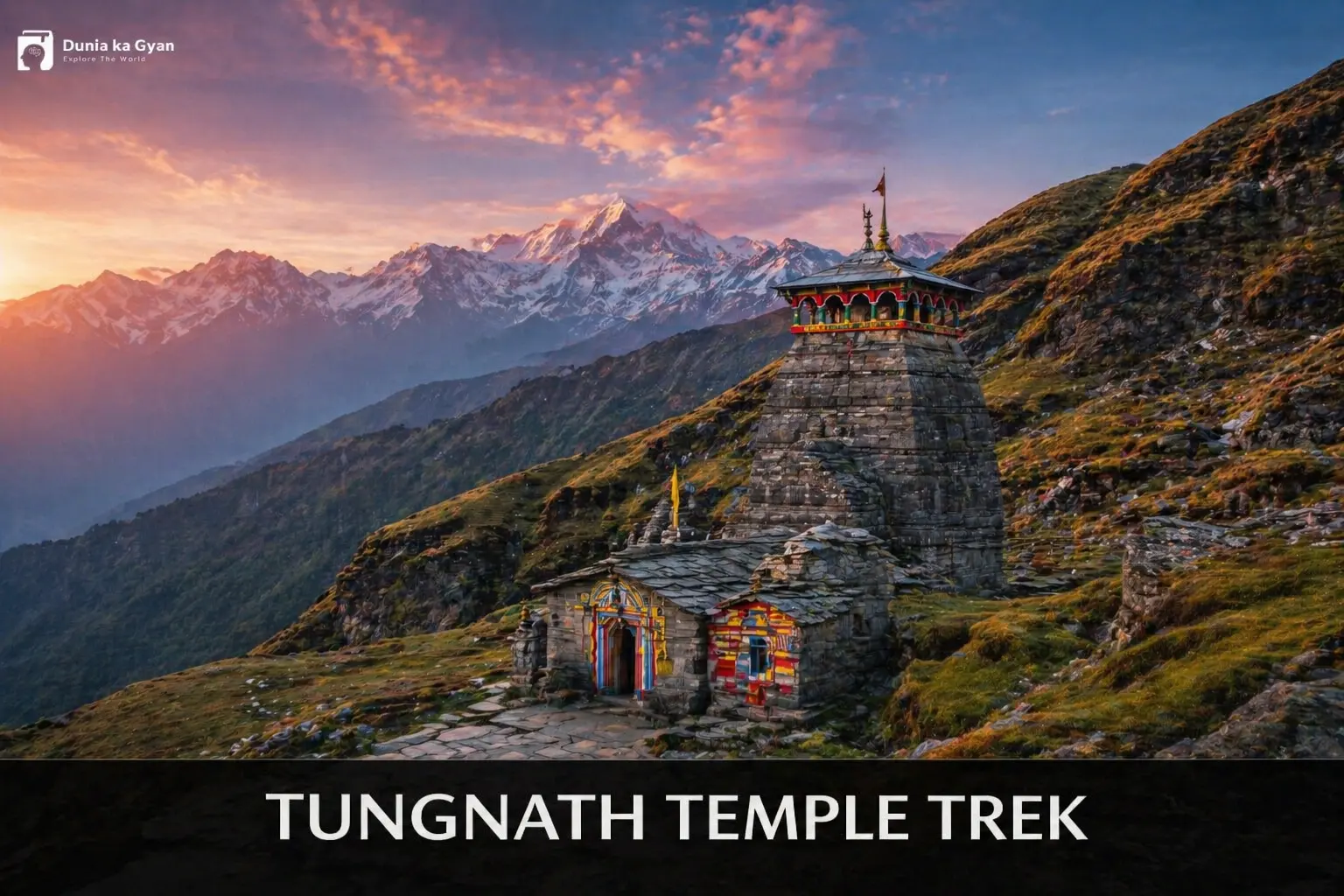
The Tungnath Temple trek is one of the most popular short Himalayan treks in Uttarakhand, starting from Chopta and leading to the highest Shiva temple in the world at 3,680 meters. Known for its beginner-friendly trail, it offers a perfect mix of spirituality, scenic beauty, and adventure.
Moreover, in this complete Tungnath trek guide, you’ll find details about distance, itinerary, best time to visit, route, and practical travel tips to plan your journey easily.
Surrounded by the pristine forests of Kedarnath Wildlife Sanctuary, the route delivers a perfect blend of spiritual devotion and Himalayan beauty. As you ascend, the landscape gradually transforms from dense forests to open alpine meadows (bugyals), creating a visually stunning experience.
Tungnath Trek Quick Info
- Location: Chopta to Tungnath Temple
- Altitude: 3,680 meters
- Distance: 4 km (one way)
- Duration: 4–5 hours
- Difficulty: Easy to Moderate
- Best Time: May–June & September–October
Flora & Fauna Along the Trail
While trekking, you may come across a variety of unique Himalayan species. Moreover, the region is home to:
- Himalayan Monal – the vibrant state bird of Uttarakhand
- Alpine vegetation and seasonal wildflowers
- Occasional sightings of musk deer and other Himalayan wildlife
Mythology & Legend: The Story of the Third Kedar
The Tungnath Temple is deeply rooted in ancient Hindu mythology, particularly the
Mahabharata.
The Pandavas’ Quest for Forgiveness
After the devastating Kurukshetra War, the Pandavas therefore sought forgiveness from Lord Shiva for committing Gotra Hatya (killing their own kin).
Lord Shiva’s Disguise
To avoid them, Lord Shiva took the form of a bull and hid in the Garhwal Himalayas.
When the Pandavas finally located him:
- Shiva disappeared into the ground
- His body reappeared in five different locations
Appearance at Tungnath
At Tungnath, it is believed that his arms (Bahu) emerged, making it one of the sacred Panch Kedar temples.
Historical Significance & Temple Origins
According to legend, the Pandavas built the original temple to honor Lord Shiva. However, historical evidence suggests that the present structure is over 1,000 years old and was built or revived by Adi Shankaracharya during the 8th century.
Moreover despite harsh weather, heavy snowfall, and centuries of exposure, the temple remains structurally strong testament to ancient engineering brilliance.
Architecture: Strength in Simplicity
Tungnath Temple reflects classic north indian nagara-style himalayan architecture.
Key Architectural Features
- Constructed using massive grey stone slabs
- A tall, curved shikhara (spire)
- Crowned with a golden kalash
Sanctum & Temple Complex
- Small, dimly lit sanctum creating a deeply spiritual atmosphere
- Houses a naturally formed Shiva Lingam
Surroundings
- Shrines dedicated to Goddess Parvati, Sage Vyasa, and other deities
- A stone idol of Nandi guarding the entrance
Chopta to Tungnath Trek Guide (Distance, Route & Difficulty)
However, trek to Tungnath begins from Chopta, often referred to as the “Mini Switzerland of India.”
This trek is widely known as a “short yet breathtaking Himalayan trek”, making it ideal for beginners and spiritual travelers alike.
Trek Overview
| Feature | Details |
| Starting Point | Chopta (~2,900 m) |
| Distance | 4 km (one way) |
| Duration | 4–5 hours |
| Difficulty | Easy to Moderate |
| Terrain | Stone-paved trail, forests, meadows |
Real Experience Tip
During the trek, the most challenging part is the continuous uphill climb, especially near the final stretch before the temple. However, starting early in the morning makes a huge difference, as the weather stays clear and the trail is less crowded. Many trekkers underestimate the altitude, so maintaining a slow and steady pace helps avoid exhaustion.
Chandrashila Peak Extension (A Must-Do Summit Experience)
If you have the stamina and time, don’t stop at Tungnath Temple continue the final 1.5 km ascent to reach Chandrashila Peak (approx. 4,000 meters).
On the other hand, the final stretch to Chandrashila Peak is steeper but highly rewarding. This short but steep stretch is the most rewarding part of the Tungnath trek
Why You Should Go Further
360° Panoramic Himalayan Views
From the summit, you get uninterrupted views of some of the most iconic Himalayan ranges.
One of the Best Sunrise Points in Uttarakhand
Watching the first rays of sunlight hit the snow-covered peaks is a surreal and unforgettable experience.
Ultimate Trekking Satisfaction
Reaching Chandrashila gives a true sense of achievement beyond just visiting the temple.
Visible Peaks from Chandrashila
On a clear day, you can witness majestic peaks like:
- Nanda Devi – India’s second-highest peak
- Trishul – known for its distinctive three-pronged shape
- Chaukhamba – a massive four-pillared mountain group
Pro Tip: Start early from Chopta to reach Chandrashila by sunrise. Weather changes quickly at this altitude, so clear views are best in the early morning hours.
Opening & Closing Dates of Tungnath Temple (2026)
Tungnath Temple is a seasonal temple, as heavy snowfall makes it inaccessible during winter months.
Every year, it opens in summer and remains accessible for a limited period. Additionally, the exact dates are decided based on Hindu calendar traditions and weather conditions.
Temple Opening & Closing Schedule (2026)
| Opening Date | 2 May 2026 (Vaishakh Panchami) |
| Closing Date | Early November (around Bhai Dooj / Kartik Purnima) |
The exact dates are decided based on Hindu calendar traditions and weather conditions.
Winter Abode of Tungnath Temple
Once the temple closes for winter, the idol of Lord Shiva is ceremoniously shifted to
Makkumath Temple.
- Located in the village of Makkumath
- Serves as the winter seat of worship
- Daily rituals and puja continue without interruption
Important Note: Even though the temple remains closed from November to April, adventurous trekkers can still attempt the Tungnath trek in snow. However, there will be no darshan, priests, or temple rituals at the summit during this period.
Tungnath Trek Complete Guide
The journey to Tungnath Temple is not just about reaching a destination; it’s about embracing the Himalayas with the right mindset and preparation.
Despite its short distance, the Tungnath trek offers a true high-altitude experience where every step tests your endurance.
Moreover, this complete guide is designed to help you plan confidently and travel responsibly.
What This Guide Helps You With
- Physical Preparation
Understand the fitness level required to comfortably complete the Chopta to Tungnath trek without exhaustion.
- Terrain & Altitude Awareness
Learn how the high altitude (3,680 m) and continuous ascent impact your breathing, stamina, and pace.
- Weather & Trail Conditions
Get insights into unpredictable mountain weather, changing temperatures, and trail safety.
- Responsible Trekking
Discover how to respect nature, avoid risks, and ensure a safe and sustainable trekking experience.
Why This Matters
Trekking in the Himalayas is very different from regular walking or short hikes. Proper knowledge and preparation can make the difference between the following:
- A stressful, tiring climb
- And a smooth, memorable, and fulfilling journey
Short Itinerary (At a Glance)
Day 1: Rishikesh to Chopta (Gateway to the Himalayas)
- Distance: 212 km
- Duration: 8–9 hours
- Route: Rishikesh → Devprayag → Rudraprayag → Ukhimath → Chopta
- Highlight: Witness the sacred confluence at Devprayag, where the Alaknanda and Bhagirathi rivers merge to form the Ganga
- Experience: Scenic mountain drive through river valleys, forested hills, and traditional Garhwali villages
- Stay: Overnight stay in camps at Chopta, surrounded by serene Himalayan landscapes
Day 2: Tungnath Temple & Chandrashila Summit Trek
- Start Early: Begin your trek at sunrise for the best weather and clear views
- Trek Route: Chopta → Tungnath Temple (4 km)
- Experience: Walk through stone-paved trails, alpine meadows, and rhododendron forests
- Optional Extension: Continue 1.5 km further to Chandrashila Peak for a breathtaking 360° Himalayan panorama
- Evening: Descend back and drive to Sari Village
- Stay: Overnight stay in a guesthouse or camp in Sari Village
Day 3: Deoriatal Trek & Return Journey
- Morning Trek: Short 3 km trek from Sari to Deoriatal Lake
- Highlight: Witness the famous mirror-like reflection of the Chaukhamba peaks in the crystal-clear lake
- Experience: Peaceful forest trail with stunning lake views and photography opportunities
- Return: Trek back to Sari Village and begin the return journey to Rishikesh
Detailed Day-wise Itinerary
Day 1: Rishikesh to Chopta – Journey into the Himalayas
- Pickup Point: Rishikesh
- Distance: 212 km
- Duration: 8–9 hours
Begin your journey early morning from Rishikesh and drive through scenic mountain roads surrounded by rivers, valleys, and lush greenery. The route takes you via Devprayag, Rudraprayag, and Ukhimath, each offering breathtaking views and spiritual significance.
- Highlight: Witness the sacred river confluence at Devprayag
- Experience: A peaceful drive through Garhwal’s natural beauty
- Evening: Arrive at
Chopta, check into your camps, and unwind - Stay: Overnight stay in alpine camps
- Bonus: Enjoy a stunning Himalayan sunset with fresh mountain air
Day 2: Tungnath Temple Trek & Sari Village Stay
Start your day early with a warm breakfast and begin your trek from Chopta.
- Trek Route: Chopta → Tungnath Temple
- Distance: 4 km (one way)
The trail is well-paved and passes through beautiful forests and meadows, making it a scenic and spiritually uplifting journey.
- Experience:
- Visit Tungnath Temple and offer prayers
- Spend time soaking in the peaceful Himalayan atmosphere
- Optional Trek: Continue 1.5 km further to Chandrashila Peak for panoramic views
- Afternoon: Descend back to Chopta
- Travel: Short drive to Sari Village
- Evening: Explore the calm village surroundings and local lifestyle
- Stay: Overnight stay in camp or homestay
Day 3: Deoriatal Lake Trek & Return to Rishikesh
- Morning: Begin your short trek from Sari to
Deoriatal Lake - Distance: ~3 km
This easy trek leads you to one of the most beautiful high-altitude lakes in Uttarakhand.
- Highlight: Witness the iconic mirror-like reflection of the Chaukhamba peaks in the lake
- Experience: Peaceful surroundings, forest trail, and perfect photography spot
- Return: Trek back to Sari Village
- Departure: Begin your drive back to
Rishikesh
Difficulty Level: Why the Tungnath Trek is Considered Moderate
However, despite its short distance, the trek to Tungnath Temple has some challenges. Although it may appear easy, several factors make it a moderate-level Himalayan trek, especially for beginners.
1. Altitude Challenge (3,680 meters)
At this height, oxygen levels are significantly lower than at sea level.
- You may experience mild breathlessness
- Some trekkers feel fatigue or light-headedness
- Proper pacing and hydration are essential to avoid discomfort
2. Continuous Ascent & Gradient
The trail from Chopta to Tungnath is consistently uphill.
- No flat resting sections
- Requires steady stamina and leg strength
- Descent can also strain knees if not careful
3. Unpredictable Mountain Weather
Weather in the Himalayas can change within minutes.
- Sudden fog reducing visibility
- Unexpected rain or snowfall
- Sharp temperature drops, especially near the summit
Best Time to Visit Tungnath Temple (Month-wise Guide)
Choosing the right season is crucial for a safe and enjoyable experience at Tungnath Temple. In addition, weather conditions play a crucial role in your trekking experience.
Seasonal Breakdown
| Season | Months | Experience |
| Summer (Peak Season) | May – June | Pleasant weather (10°C–20°C), ideal for beginners, lush greenery and blooming rhododendrons |
| Autumn (Best Views) | September – October | Crystal-clear skies, best Himalayan views, perfect for photography |
| Late October (Offbeat) | Late October | Fewer crowds, peaceful atmosphere, colder temperatures with intense spiritual vibe |
Seasons to Avoid
Monsoon (July – August)
- Slippery stone-paved trails
- High risk of landslides on the route from Rishikesh
- Cloud cover blocks mountain views
Winter (November – April)
- Temple remains closed due to heavy snowfall
- No darshan or rituals at the summit
- Trek possible only for experienced snow trekkers
Tip: For the perfect balance of pleasant weather, clear views, and safe trekking conditions, plan your visit between May and June or September and October.
Tungnath Temple Darshan – Timings & Best Time to Visit (2026)
Planning your visit to Tungnath Temple requires proper timing, as this high-altitude shrine remains open only for a limited period each year due to extreme weather conditions.
Located at 3,680 meters in the Himalayas, Tungnath is accessible for roughly six months annually, making it important to plan your darshan carefully.
Important Dates for 2026
The official opening and closing dates are traditionally announced on Maha Shivratri by the temple committee.
Expected Schedule (2026)
| Event | Date |
| Temple Opening Date | 2 May 2026 (Expected) |
| Opening Time (Day 1) | Around 11:15 AM – 12:00 PM |
| Temple Closing Date | 4–5 November 2026 (Expected) |
Winter Seat (Winter Abode of the Deity)
During winter (November to April), when the temple is covered in heavy snow, the idol of Lord Shiva is ceremonially shifted to Makkumath Temple (Markandeya Temple).
- All rituals and daily worship continue here
- Devotees can visit Makkumath for darshan during the off-season
Daily Darshan Timings
| Time | Details |
| Morning Darshan | 7:00 AM – 12:00 PM |
| Afternoon Break | 12:00 PM – 3:00 PM (Temple Closed) |
| Evening Darshan | 3:00 PM – 7:00 PM |
| Evening Aarti | Around 6:30 PM |
The evening aarti is a deeply spiritual experience, with temple bells echoing across the silent Himalayan landscape.
How to Reach Chopta for Tungnath Trek
Reaching Chopta, the base camp for the Tungnath Temple trek, is a journey through scenic mountain roads, river valleys, and spiritual towns of Uttarakhand.
Step 1: Reach Rishikesh (Starting Point)
Your journey begins from Rishikesh, the gateway to the Garhwal Himalayas.
Travel Options
- By Bus: Regular Volvo and state transport buses from Delhi to Rishikesh
Duration is 6 to 7 hours - By Train: Nearest railway station: Yog Nagari Rishikesh (well-connected to major cities)
- By Air: Nearest airport: Jolly Grant Airport, Dehradun (21 km from Rishikesh)
Taxi services easily available to reach the city
Step 2: Rishikesh to Chopta (Scenic Mountain Drive)
- Distance: 200–220 km
- Duration: 8–9 hours
The drive from Rishikesh to Chopta is one of the most scenic routes in Uttarakhand, passing through river confluences, valleys, and traditional Himalayan towns.
Route Highlights
- Devprayag – sacred confluence of Alaknanda & Bhagirathi forming the Ganga
- Rudraprayag – meeting point of Alaknanda & Mandakini rivers
- Ukhimath – winter seat of Kedarnath deity
Expect winding mountain roads, stunning river views, and refreshing natural landscapes throughout the journey.
Step 3: Chopta to Tungnath Trek
Your trek begins from Chopta
- Distance: 4 km (one way)
- Trail Type: Well-paved stone path
The route gradually ascends through:
- Dense forests
- Alpine meadows (bugyals)
- Open Himalayan views
The trail leads you directly to Tungnath Temple, offering a perfect blend of natural beauty and spiritual experience.
Travel Tip: Start early from Rishikesh and aim to reach Chopta before sunset to enjoy the mountain views and avoid driving in the dark on hilly roads.
Packing & Gear List for Tungnath Trek
Moreover, packing smartly ensures a comfortable trekking experience. Trekking to Tungnath Temple requires proper planning, as weather in the Himalayas can change rapidly
1. Trekking Clothing (Layering System)
Follow the 3-layer rule to stay warm and adaptable:
- Base Layer: 2 full-sleeve dry-fit T-shirts (moisture-wicking)
- Insulation Layer: 1 fleece jacket or light sweater (retains body heat)
- Outer Layer: 1 heavy padded/down jacket (essential for summit & nights)
- Lower Wear: Quick-dry trekking pants (avoid jeans)
- Thermals: 1 set (top & bottom) for night use
2. Footwear & Socks
- High-ankle trekking shoes with strong grip (important for stone trails)
- 2 pairs of cotton socks + 1 pair of woolen socks (for warmth at night)
3. Backpack Essentials
- 30–40L backpack (comfortable with waist support)
- Waterproof rain cover (mandatory in mountains)
4. Accessories
- Woolen cap (for cold) & sun cap (for daytime trek)
- UV-protected sunglasses
- Gloves (waterproof or fleece)
5. Trekking Essentials
- Trekking pole (reduces pressure on knees)
- Headlamp or torch (for early morning or night use)
- At least 2 water bottles (1L each) to stay hydrated
6. Personal Hygiene & Medical Kit
- Sunscreen (SPF 40+) & lip balm
- ORS / Electrol packets (prevent dehydration)
- Basic medicines: Paracetamol, band-aids, pain relief spray
- Personal prescription medicines
Common Mistakes to Avoid on Tungnath Trek
- Starting late and missing clear mountain views
- Ignoring altitude and walking too fast
- Wearing new shoes without testing
- Not carrying enough water
- Underestimating weather changes
Preparation & Fitness Tips
To comfortably complete the Chopta to Tungnath trek, start preparing at least 2 weeks in advance.
1. Stamina Building (Cardio)
- 3–5 km running or brisk walking (3–4 times a week)
- Cycling or swimming (low-impact alternatives)
- Daily stair climbing (best practice for uphill trekking)
2. Strength Training
- Squats: 3 sets × 15 reps
- Lunges for leg strength
- Planks for core stability and balance
3. Altitude Preparation
- Drink 3–4 liters of water daily before the trek
- Avoid alcohol and smoking (affects oxygen levels)
- Maintain a slow and steady walking pace
4. Trek-Day Golden Rules
- Walk at a comfortable, steady pace (don’t rush)
- Pack light carry only essentials
- Always break in your trekking shoes before the trip
Himalayan Hikers Safety Standards & Expertise
With years of experience in the Garhwal Himalayas, trekking organizations ensure your journey to Tungnath Temple is safe, organized, and comfortable.
Safety Features
- NIM-certified trek leaders (trained in mountain rescue)
- Daily health monitoring (Oximeter & BP checks)
- Emergency oxygen cylinders available
- Fully equipped first-aid and medical kits
Equipment & Technical Support
- Micro-spikes (for snow grip in winter conditions)
- Gaiters (to protect from snow and mud)
- Walkie-talkies for communication in remote areas
Accommodation & Food
- Premium 4-season tents for extreme weather
- Hygienic and freshly prepared meals
- Options available: Veg, Egg, and Jain food
- Clean and well-maintained campsites
What is Included & Excluded in Tungnath Trek
Included
- Transport from Rishikesh to Rishikesh
- Forest permits and entry fees
- Accommodation (tents / homestay)
- All meals during the trek
- Trekking gear and safety equipment
- Experienced guides and support staff
Not Included
- Personal travel insurance
- Personal medical expenses
- Porter charges (extra)
- Meals during travel days
- Personal toiletries and essentials
Conclusion
The Tungnath trek offers a perfect blend of adventure and spirituality. However, the journey to Tungnath Temple from Chopta is short yet incredibly rewarding, with stunning Himalayan views and a peaceful atmosphere.
Moreover, whether you visit for trekking or spiritual reasons, this experience stays memorable. However, proper planning and the right timing are essential to enjoy the trek safely and comfortably.
Frequently Asked Questions
It is considered easy to moderate. Beginners with basic fitness can complete it comfortably with proper pacing and rest.
It usually takes 4–5 hours one way, depending on your speed and weather conditions.
The best time to visit is between May–June and September–October, when the temple is open and the Himalayan views are clear.
Yes, you can visit Tungnath and continue 1.5 km further to Chandrashila Peak in a single day if you start early and maintain a steady pace.
Yes, the trail is well-marked, popular, and generally safe. However, it’s advisable to start early, check weather conditions, and inform someone about your plan.
People are also reading:

One thought on “Tungnath Temple Trek 2026: Complete Travel Guide”